
Wood vs. Hollow Metal Doors: A Commercial Buyer’s Honest Guide
Ask ten people whether wood or hollow metal doors are “better” and you’ll get ten answers, most of them wrong, because it’s the wrong question. The right door depends on the opening it hangs in. And the cost that matters isn’t the number on the invoice, it’s what that door costs you across the life of the building. A door that warps in two years was never cheap.
Below is how the two are really built, how they hold up, what fire code demands of them, and how to make the call one opening at a time. We’d rather you spec the right door than the most expensive one.
How they’re actually built
Nearly every decision in this guide traces back to construction, so it’s worth two minutes here.
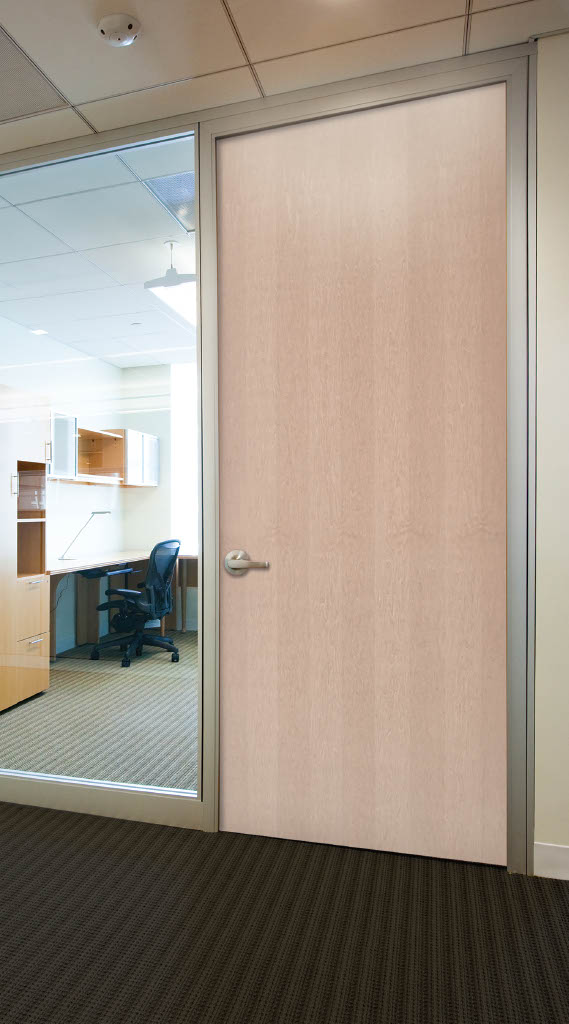
Commercial wood doors are solid core. Hollow core doors are a residential product and have no business in a commercial opening. What sits inside that core varies. Particleboard is stable and affordable. Structural composite or staved lumber is stronger and takes more abuse. A mineral core is what you use when the door needs a fire rating. The face is a wood veneer or plastic laminate.
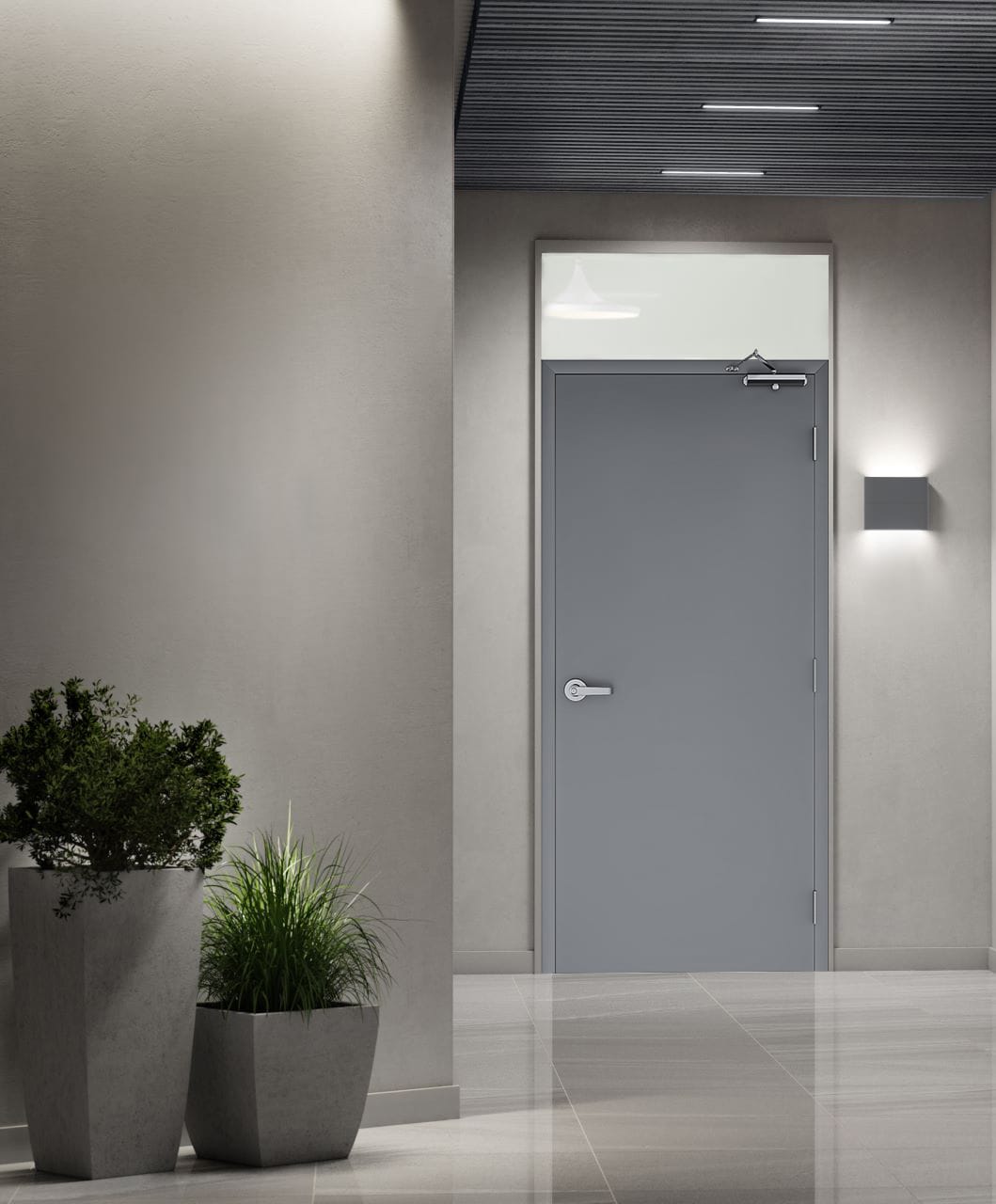
Hollow metal doors are steel skins wrapped around a core. The skin is specified by gauge: 18 gauge for standard interior, 16 gauge for heavier traffic and exterior, 14 gauge for high abuse or security. The core is honeycomb for standard use, polystyrene or polyurethane where you need insulation on an exterior opening, or mineral for a fire rated assembly. Gauge and core are where the real spec decisions live.
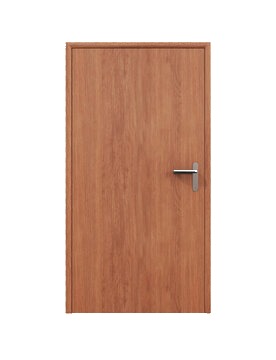
- Looks premium in lobbies and offices
- Good sound control
- Hates moisture, can warp
- Fire rating tops out near 90 min
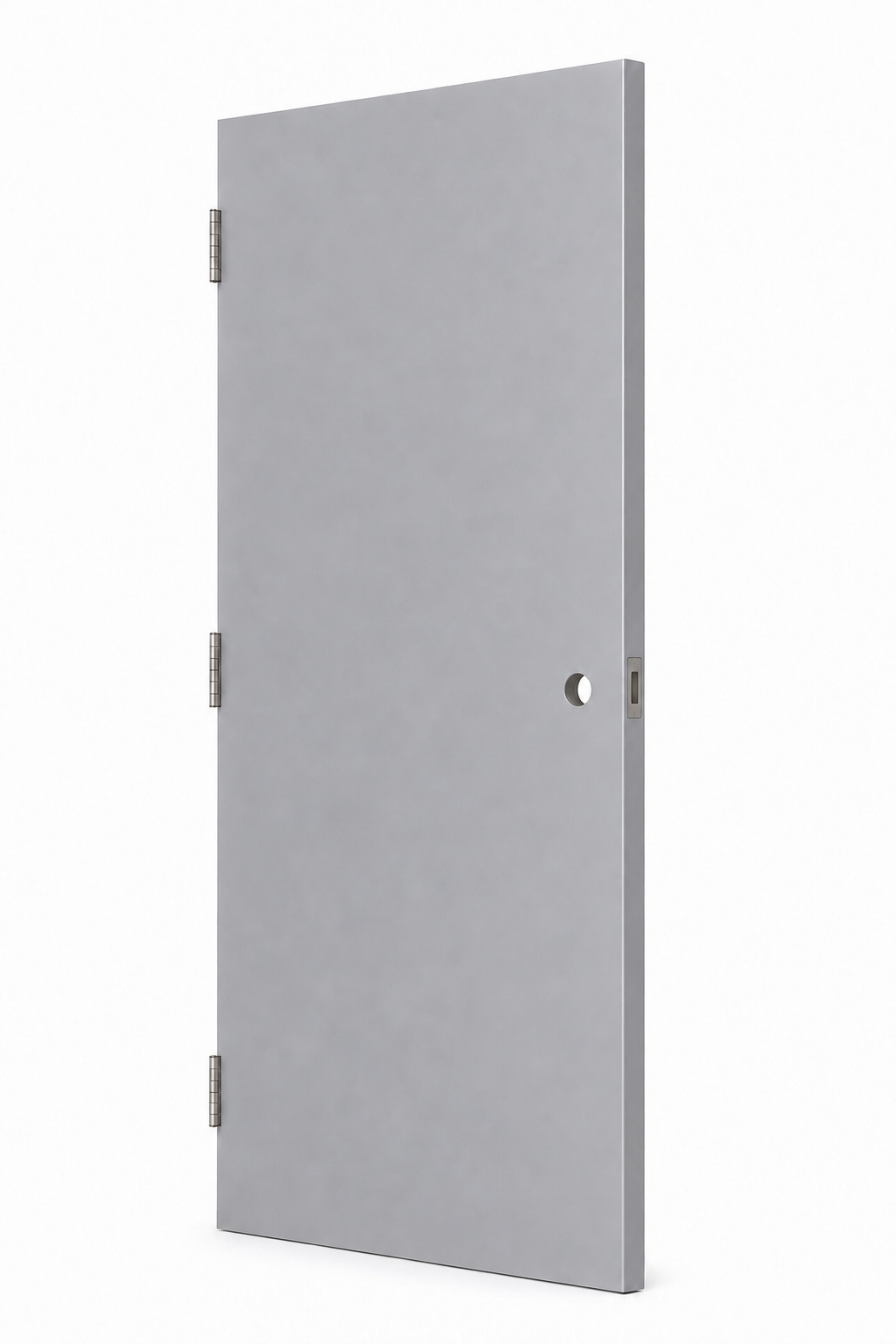
- Tough and secure: exterior, stairwells
- Fire ratings up to 3 hours
- Built for weather
- Can dent or rust if the coating breaks
Durability and daily abuse
Hollow metal pulls ahead here and never looks back. Steel absorbs carts, kicks, weather, and constant traffic for decades. In hospitals, schools, warehouses, and back of house, 16 or 14 gauge steel is the obvious call. Wood scuffs and dents at impact points, edges chip, and veneer can delaminate under abuse. None of that disqualifies wood. It just means wood belongs where people use a door, not where they beat on it.
Security
A steel door in a steel frame resists forced entry in a way wood simply can’t. Wood splits, pries, and bores through. Any exterior entrance, any opening you need locked tight, and anything protecting equipment or inventory should be hollow metal. This one is rarely close.
Fire rating and code
Hollow metal assemblies cover the full range of ratings: 20, 45, 60, and 90 minutes, and up to 3 hours. Wood fire doors typically stop at 90 minutes. For stair enclosures, exit corridors, and rated walls, code often requires a rating wood can’t deliver, and the decision gets made for you.
Two things trip buyers up. First, the rating belongs to the whole assembly, not the door by itself. A 90 minute door in a 20 minute frame with the wrong hardware fails inspection. Door, frame, hinges, closer, and latch all need matching labels. Second, you cannot field modify a labeled door. Cutting a vision lite or undercutting it on site voids the label, so plan the prep before the door ships.
Moisture and environment
This is wood’s weak spot, and it’s a serious one. Humidity, exterior exposure, and coastal air make wood warp, swell, and delaminate. Never spec wood for an exterior opening, a pool area, a kitchen, or anywhere with real moisture. Hollow metal owns the exterior. Galvannealed steel resists corrosion well but isn’t immune, so match the finish to the location: primed for inside, galvannealed for out.
Sound and looks
Solid core wood dampens sound well, which is why it’s a favorite for offices and conference rooms. Hollow metal can match or beat it acoustically, but only with proper gasketing and seals.
When the opening is part of the experience, like a lobby, an executive suite, or a hotel corridor, wood veneer reads warm and premium in a way steel doesn’t. Steel reads utilitarian, though it paints clean and wood grain options exist. Where appearance is doing real work, wood usually wins.
The real cost conversation
Most pitches skip this part. On a plain, non rated interior opening, a basic solid core wood door is often cheaper to buy than its hollow metal equivalent. Compare only that number and wood looks like the deal.
Sticker price is the wrong number. On exterior and high traffic openings, hollow metal lasts longer and needs far less maintenance, so it costs less to own across twenty years, sometimes dramatically less once you count the wood doors you’d have replaced along the way. Think cost per opening over the life of the building.
Don’t forget the frame
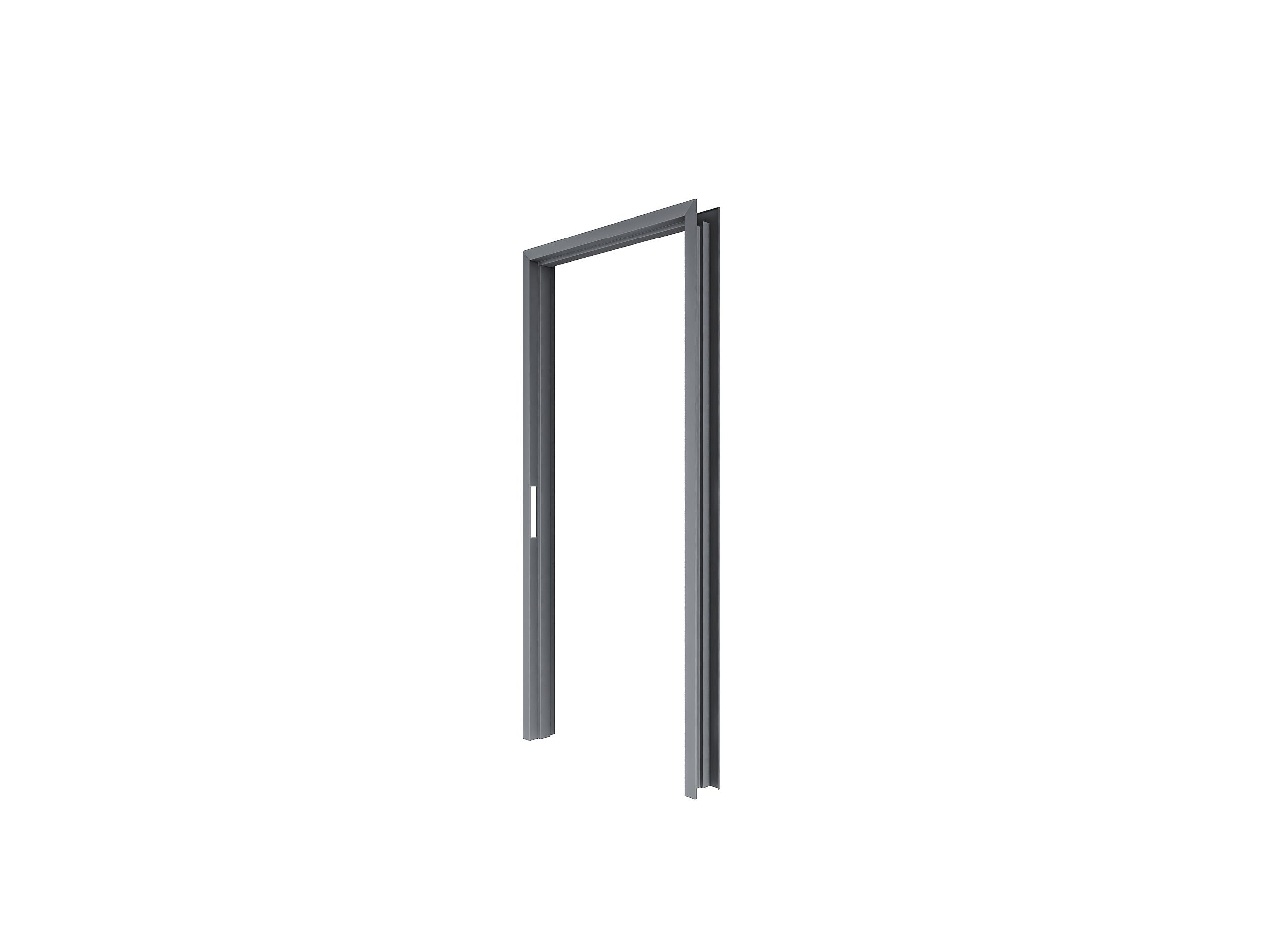
First time buyers miss this constantly: in commercial construction, both wood and steel doors usually hang in hollow metal frames. The frame carries the fire rating, anchors into the wall, and holds the hardware prep. Depth has to match your wall thickness, and anchors have to match the wall type — masonry anchors for block, weld or stud anchors for steel stud partitions. Spec the frame as carefully as you spec the door. They’re a system, not two separate purchases.
How to choose, opening by opening
Don’t pick a door for the building. Pick one for each opening. Walk the door schedule:
Most projects end up using both: metal where the door is working hard, wood where it’s being seen. That’s the correct answer, and nobody should treat it as a compromise.
Bottom line
Each door is better at something. Exterior, fire, abuse, security, and moisture point to hollow metal. Interior, appearance, acoustics, and budget point to wood. Whichever leaf you hang, spec the frame with the same care, because in commercial work the frame is usually steel either way.
Need help speccing a project?
Hollow metal doors & frames, shipped nationwide, often next day.
REQUEST A QUOTE