
Galvannealed vs. Galvanized Steel: What A40, A60 and G90 Actually Mean
Ask about galvannealed vs. galvanized steel and most people in this business can recite what A40, A60 and G90 mean. Far fewer can explain why the standard that governs steel doors and frames actively steers you away from the coating with the most zinc on it. That gap is where specifications go wrong, and where paint starts peeling eighteen months after handover.
The short version: the letter tells you what kind of coating you are getting. The number tells you how much of it, counting both faces of the sheet. And on a door that is going to be painted, more zinc is not automatically better.
Galvannealed vs. galvanized steel: what the letter means
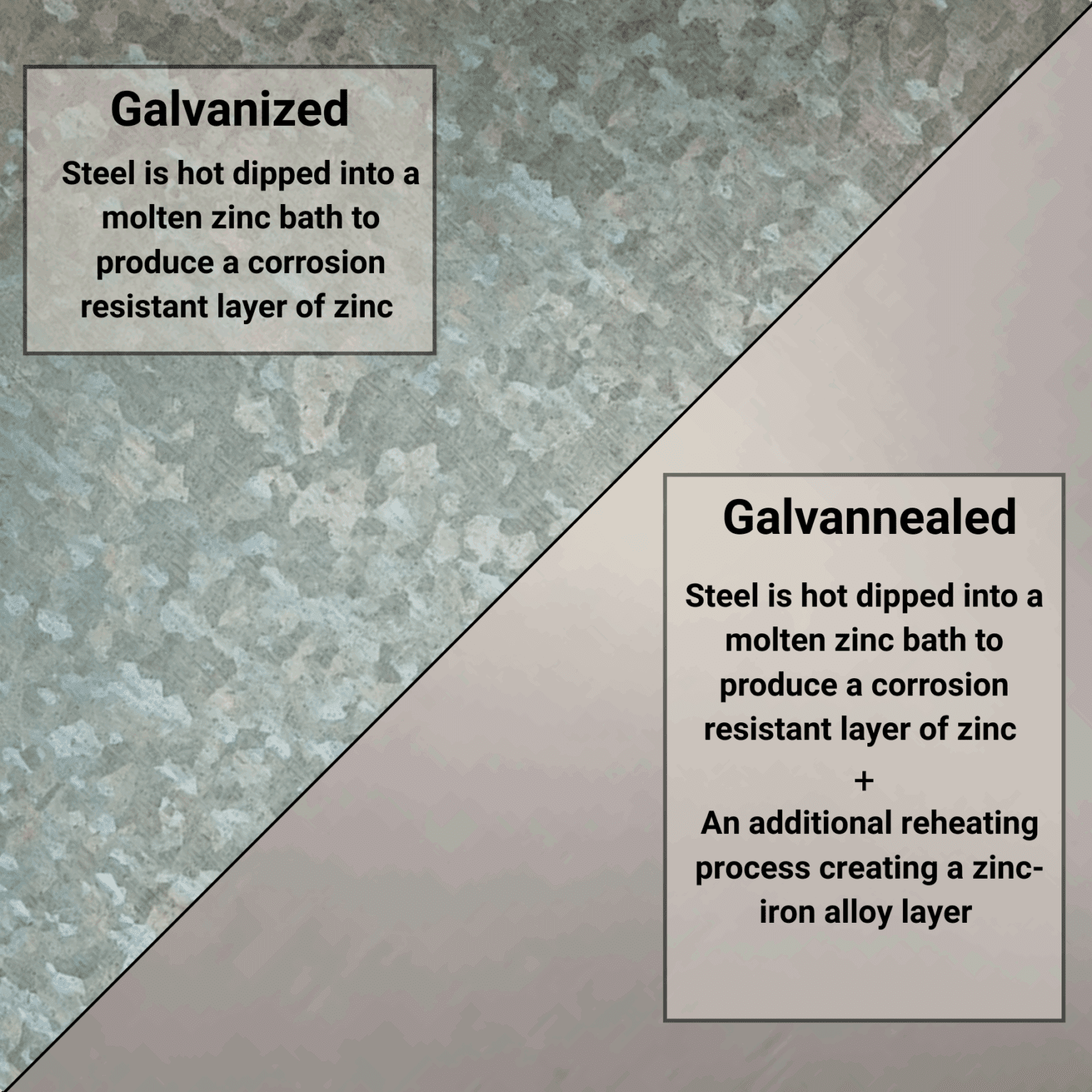
Both coatings come out of the same specification, ASTM A653, and off the same production line. Steel runs as a continuous ribbon through a bath of molten zinc, then gets wiped down with high pressure air to a controlled thickness. What happens next is the whole difference.
G is galvanized. The sheet cools straight out of the bath. The coating stays essentially pure zinc, and it leaves that bright crystalline spangle pattern you recognize from roof deck and ductwork.
A is galvannealed. The sheet goes from the zinc bath directly into a reheat furnace. The zinc and the iron in the steel diffuse into each other, forming a zinc-iron alloy layer running roughly 8 to 10 percent iron. No spangle. The surface comes out flat, matte grey and slightly toothy.
- Nearly pure zinc coating
- Bright, spangled surface
- Strong bare-metal corrosion barrier
- Poor paint adhesion, harder to weld
- Zinc-iron alloy, about 8 to 10% iron
- Matte, non-spangled surface
- Excellent primer and topcoat adhesion
- Welds cleaner, less zinc fume
The number: where nearly everyone slips
The number is coating weight in ounces per square foot, expressed as a minimum average, total both sides of the sheet. Not per side. This single point causes more spec confusion than anything else in the category.
| Designation | Coating weight (total both sides) | Metric equivalent |
|---|---|---|
| A40 | 0.40 oz/ft² | ZF120 |
| A60 | 0.60 oz/ft² | ZF180 |
| G60 | 0.60 oz/ft² | Z180 |
| G90 | 0.90 oz/ft² | Z275 |
The Steel Door Institute gives the conversion as roughly 1.7 mils of thickness per oz/ft². So A60 works out to about one mil across both faces combined, which is around half a mil on each side. If someone quotes you a per-side thickness, halve the designation number before you compare them, or you will be off by a factor of two.
The part that surprises people
Here is where instinct fails. G90 carries fifty percent more zinc than A60, so it should be the premium choice for a corrosive environment. On a painted hollow metal door, it is not.
Appendix B of ANSI/SDI A250.8, the specification for standard steel doors and frames, states plainly that G type coatings are not recommended for that standard, on the grounds of paint adhesion and welding problems. It goes further. Heavier coating weights such as G60 and G90 are known to crack and peel, which can produce performance failures under the prime paint and factory finish tests in ANSI/SDI A250.10 and A250.3.
The reason is mechanical. Paint does not grip soft, pure zinc well. The zinc-iron alloy surface left by galvannealing is matte and microscopically rough, so primer keys into it and stays there. Adding more pure zinc just gives you a thicker layer of the thing the paint is struggling to hold onto, and a thicker layer is more prone to cracking when the sheet gets formed, rolled and bent into a door or a frame profile.
Welding, and why frame corners fail
The alloy layer has a higher melting point than pure zinc and holds together better under heat. Galvannealed steel welds more cleanly, burns off less zinc, and produces less zinc fume in the shop. Just as important, the area around the weld bead still accepts primer afterward, so the corrosion protection carries across the joint instead of stopping at it.
That matters on welded masonry frames and on any field modification. A galvanized frame welded in the field tends to leave you with a bright, contaminated zone that fights every coating you put on it.
A40 or A60: not a quality ladder
This gets mischaracterized constantly. A40 is not the budget version of A60.
A250.8 sets A40 as the floor. When a hot dipped coating is specified, the coating weight has to meet or exceed 0.40 oz/ft² total both sides. A40 is a compliant, normal, widely stocked coating, and on the right opening it is entirely correct.
A60 is what most architectural specifications call for, and it is the sensible default on exterior openings, because the extra zinc buys margin where weather, wash down and salt are in play. On a dry interior opening that argument thins out quickly, and a large share of interior commercial doors are plain cold rolled steel carrying no metallic coating at all, just primer.
Specify on exposure. Do not specify on the bigger number.
So when is G90 right?
It has a legitimate place, just not on a painted door leaf. G90 makes sense on unpainted or mill finish work where the bare zinc is doing the corrosion job on its own, and in assemblies where the spec writer has deliberately engineered the finish system around a galvanized substrate. Outside of those cases, on a painted commercial door or frame, A60 is the safer specification and A40 is the standard baseline.
What actually fails in the field
Now the uncomfortable part, and the thing nobody selling you doors wants to lead with: the coating designation is rarely what kills the opening.
Cut edges, hinge and lock preps, undercuts, drilled holes and field welds are all bare steel. The mill coating never touched them. A door with an excellent coating and a butchered, unprimed prep will show rust before an A40 door where every cut was cleaned and touched up properly.
Coating designation sets the baseline. Handling, prep quality and touch up decide the outcome. If you are choosing between A40 and A60 while your installers are hanging doors with bare cut edges, you are optimizing the wrong variable.
How to read it on a submittal
The galvannealed vs. galvanized steel decision shows up as one line in a specification. It usually reads something like this:
Three things to check every time. The ASTM reference should be A653. The letter should be A on anything that will be painted. The number should match the exposure the opening actually sees. If a submittal comes back with a G designation on a painted door or frame, ask why before it ships, not after the punch list.
Quick reference: galvannealed vs. galvanized steel
What Imperial supplies
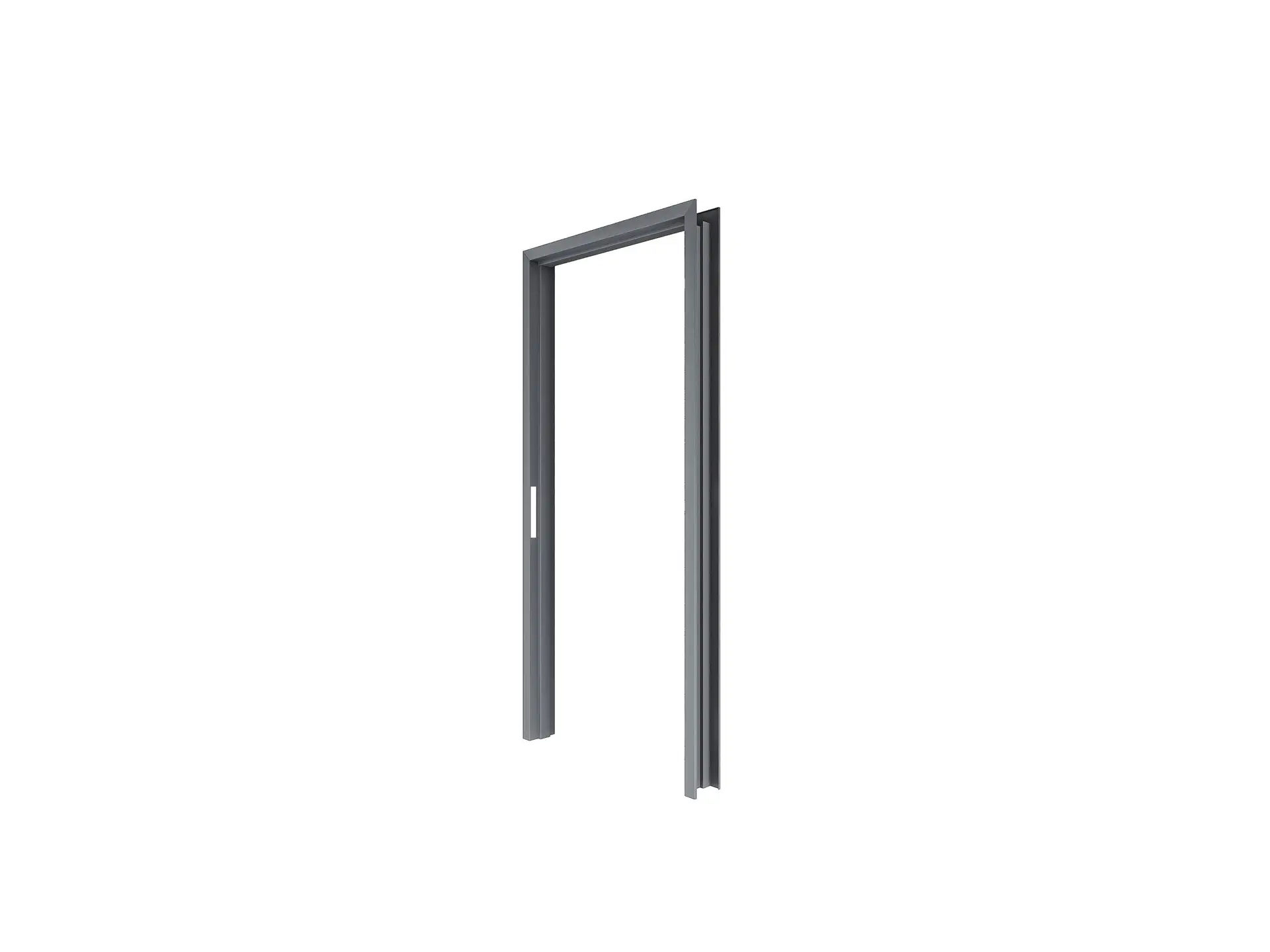
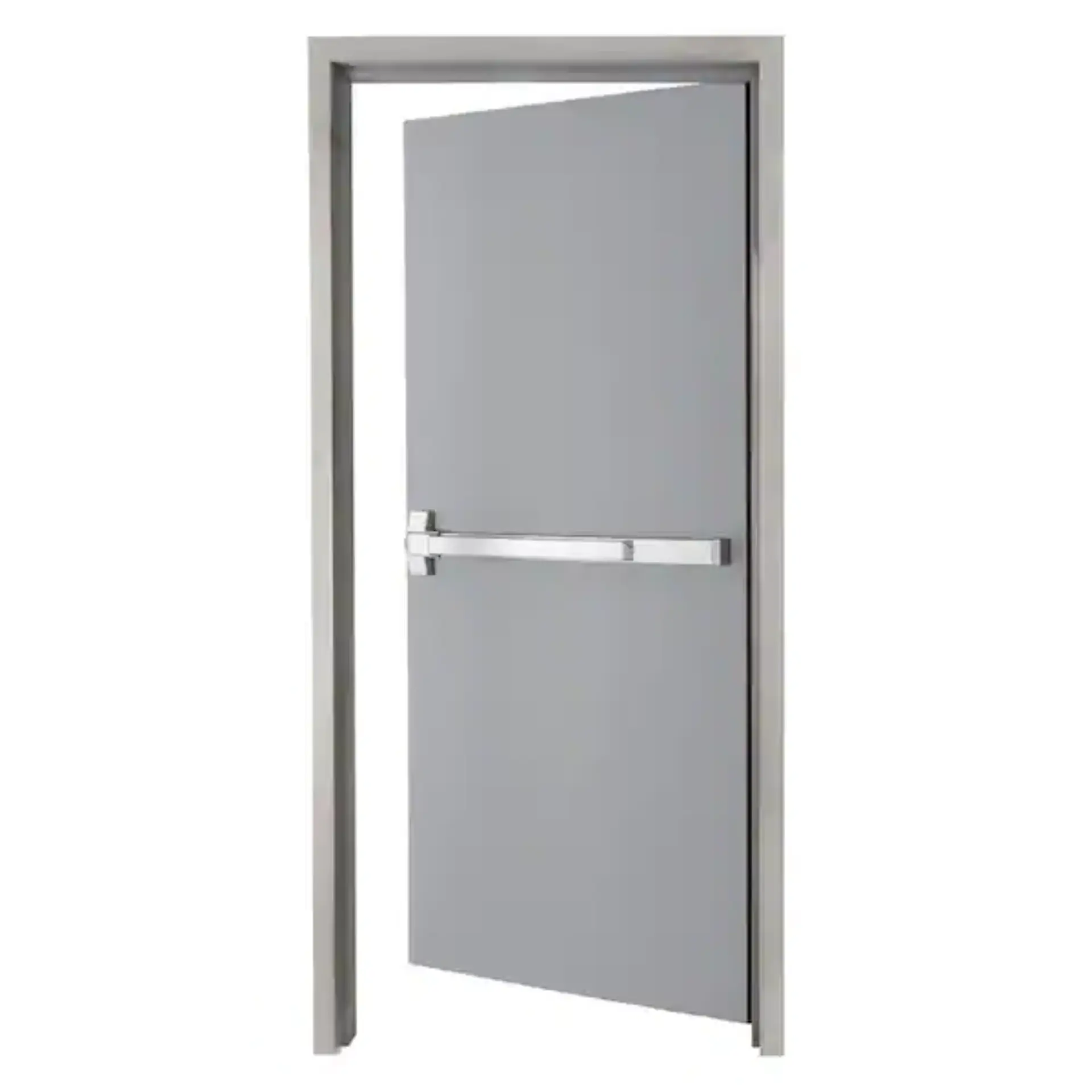
Imperial Series hollow metal doors and frames are supplied in A40 galvannealed steel as standard. That applies across the range: flush and embossed doors, drywall frames, masonry frames and adjustable frames all carry the same coating specification, interior or exterior. A40 is the SDI baseline described above, not a reduced grade.
When a project specification calls for more, A60 galvannealed and G90 galvanized are both available, and stainless steel faces are available on doors. Doors ship with a gray water-based primer, ready for finish paint in the field. Frame material is finished with a smooth powder coat. All of it is manufactured to ASTM A653 / A653M.
Related reading: wood vs. hollow metal doors, and hollow metal door sizes and rough openings. You can also browse our flush hollow metal doors and drywall frames.
Bottom line on galvannealed vs. galvanized steel
On galvannealed vs. galvanized steel, the letter matters more than the number. A type galvannealed steel is what belongs on a painted commercial door or frame, because the zinc-iron alloy surface holds primer and welds cleanly, and because the standard that governs these products says so explicitly. Between A40 and A60, let the exposure decide rather than the arithmetic. And whichever you specify, protect the cut edges, because that is where the failures actually start.
Not sure which coating your project calls for?
Hollow metal doors and frames, shipped nationwide.
REQUEST A QUOTE